
PRESS RELEASE
September 17, 2026
tmsuk Co., Ltd.
College of NISHINIHON Nursing and Medical Care and tmsuk Launch
AI-Enabled Pediatric Nursing Training Project
Pedia_Roid will help students learn to recognize and respond to a child patient’s words, movements and physical signs before entering clinical practice
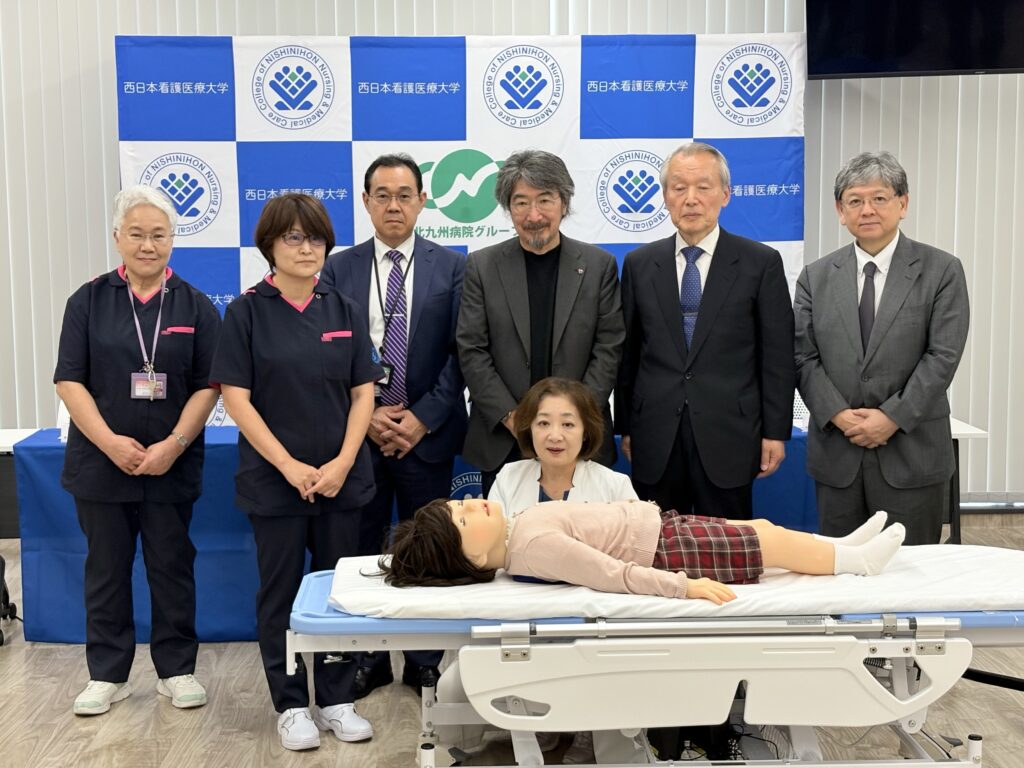
KITAKYUSHU and KYOTO, Japan — College of NISHINIHON Nursing and Medical Care and tmsuk co., ltd. today announced a joint research project to develop a new approach to pediatric nursing education using Pedia_Roid, tmsuk’s pediatric patient simulation robot.
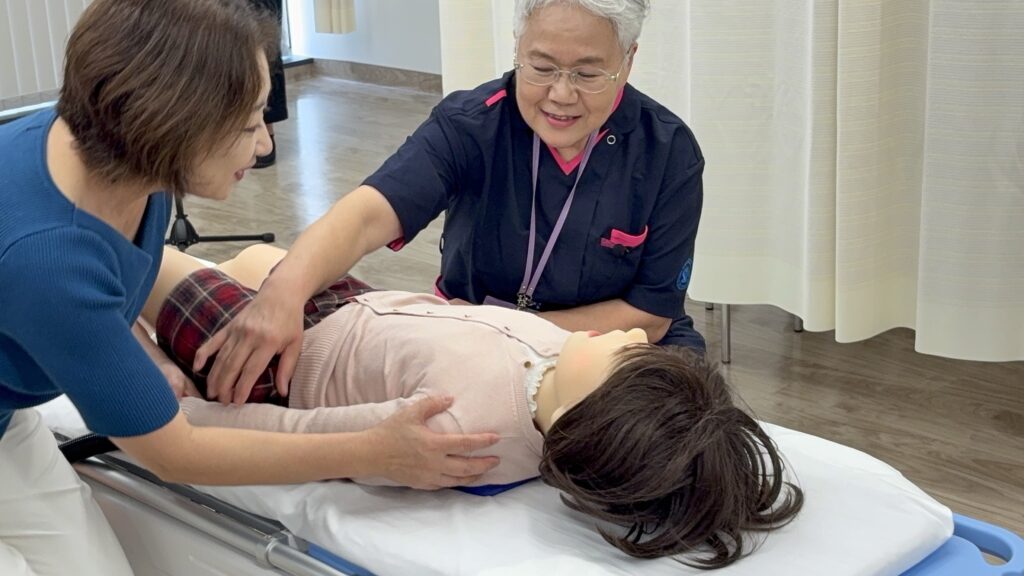
The project brings together the college’s expertise in pediatric nursing and simulation-based learning with tmsuk’s robotics and AI technology. The aim is to give nursing students a safe, realistic way to practice communicating with children, notice changes in their condition and decide how to respond before working with real patients.
Pedia_Roid can show both verbal and physical reactions. This means students will not simply conduct a conversation: they will also need to observe the child patient’s movements and clinical signs, consider what those responses mean and adapt their care.
Why This Research Matters
Caring for children requires more than technical skill. Nurses must explain tests and treatment in language a child can understand, respect the child’s feelings and watch closely for small changes in both physical condition and emotional state.
Yet nursing students have fewer opportunities to gain this experience directly. Pediatric wards have declined in number, hospital stays are shorter and repeated practice with a child patient is not appropriate when it could cause additional stress. Simulation-based learning can help close this gap by allowing students to practice difficult situations safely and repeatedly before entering clinical settings.
What the Project Will Develop
The partners will develop a version of Pedia_Roid whose condition and behavior can change in response to a student’s words, tone and approach. For example, the robot may react differently depending on whether a student acknowledges the child’s fear, explains a procedure clearly or adjusts the way care is delivered.
The system will be tested in nursing classes. Feedback from students and faculty will help the partners assess its value as a teaching tool, improve the training scenarios and refine the robot for practical use.
| Key activities | – Develop pediatric nursing scenarios for Pedia_Roid
– Create AI-driven verbal and physical patient responses – Test the system with nursing students and faculty – Use classroom feedback to improve the robot and training model |
| Partner roles | College of NISHINIHON Nursing and Medical Care: Design and evaluate the nursing education program and gather feedback from students and faculty.
tmsuk: Integrate AI with Pedia_Roid and develop the robot’s functions and responses. |
About Pedia_Roid
Pedia_Roid is a child-sized patient simulation robot developed by tmsuk. It has been used mainly for training in pediatric dentistry and emergency care.
The robot can reproduce many of the signs that healthcare professionals need to observe in children. These include limb movement, eye and pupil movement, breathing, pulse, changes in skin color, heart and breathing sounds, convulsions, wheezing and chest retractions.
Children may cry, pull away or move when they feel anxious or frightened. Their response can also change depending on how a healthcare professional speaks to them and explains what will happen. Pedia_Roid is designed to bring these communication and observation challenges into a safe training environment.
Product page: https://www.tmsuk.co.jp/pedia_roid/
Video: https://youtu.be/DBd1X7tVBvo
How AI and the Robot Will Work Together
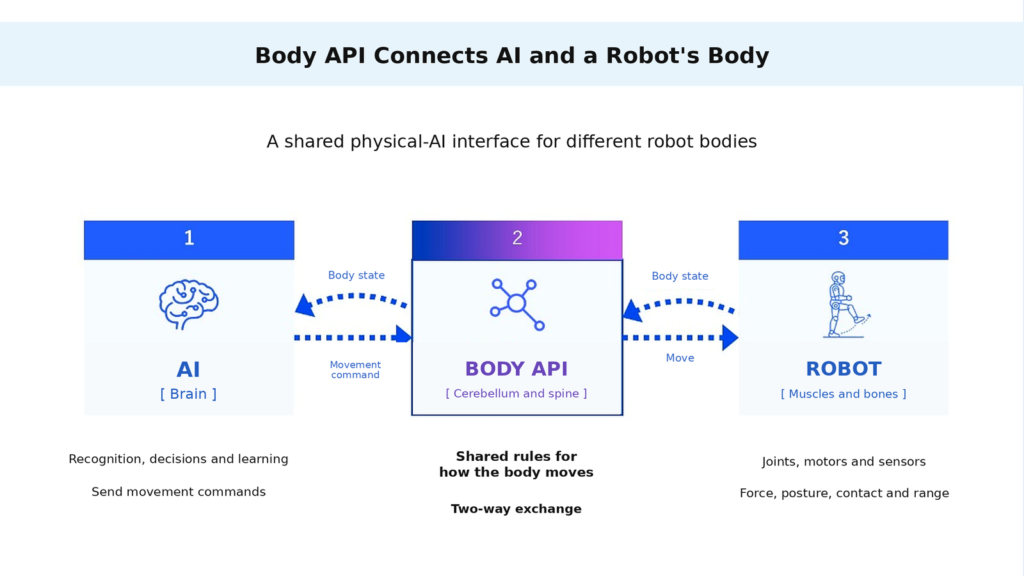
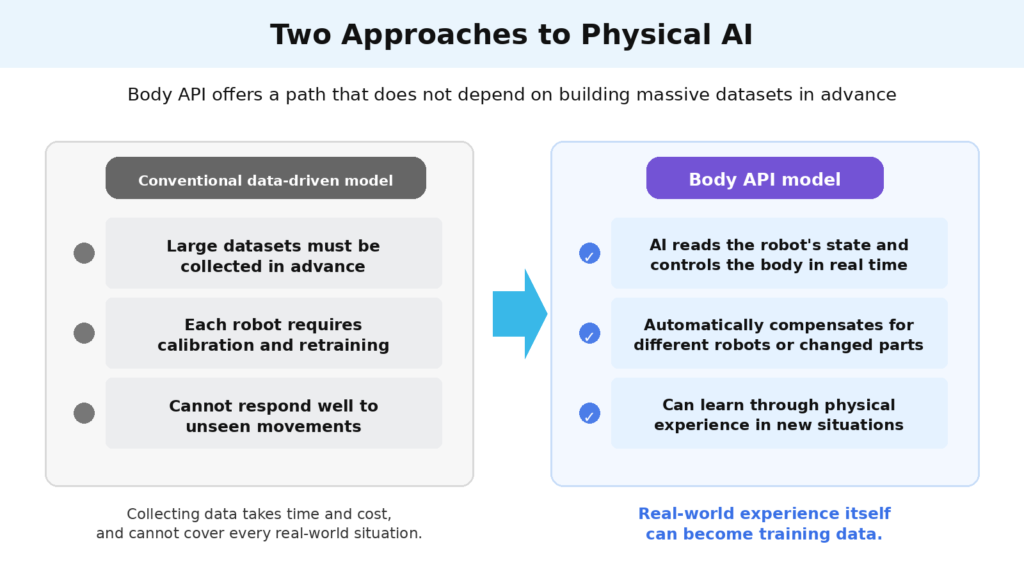
tmsuk calls the connection between AI and a robot’s physical functions the Body API. It allows information to move in both directions: the AI can tell the robot how to respond, while the robot can report its posture, movement and other physical states back to the AI.
For Pedia_Roid, the AI will consider what a nursing student says and does, then select an appropriate response. The robot will express that response through speech, movement, facial cues and clinical signs. This gives students a more realistic situation in which they must listen, observe and decide what to do next.
Next Steps
The partners will evaluate how effectively Pedia_Roid supports learning and will continue to develop functions based on the needs of students and educators. Their long-term goal is to create a practical physical-AI training tool that can support pediatric nursing education across Japan.
By giving students a safe place to practice before caring for real children, College of NISHINIHON Nursing and Medical Care and tmsuk aim to strengthen nursing education and contribute to safer pediatric care.
Information in this press release is current as of the date of publication and is subject to change without notice.
About College of NISHINIHON Nursing and Medical Care
Website: https://www.nnmc.ac.jp/
College of NISHINIHON Nursing and Medical Care opened in April 2026 with a curriculum designed to develop sound clinical judgment and practical nursing skills. The college places particular emphasis on AI and simulation-based education and operates a simulation center equipped with advanced training technology. Its faculty includes many educators with extensive clinical experience. By connecting needs in clinical practice with technology from industry, the college aims to help develop new tools for nursing education.
President: Makoto Hashizume
Address: 1-2 Higashijono-machi, Kokurakita-ku, Kitakyushu, Fukuoka 802-0054, Japan
About tmsuk co., ltd.
Website: https://www.tmsuk.co.jp
tmsuk develops practical service robots for work that is physically demanding or affected by labor shortages. Its “WORKROID” robots are designed for real-world use in fields including healthcare, construction, personal mobility and disaster response.
President and CEO: Yuji Kawakubo
Head office: 689-1 Daikoku-cho, Kamidachiuri-agaru, Jofukuji-dori, Kamigyo-ku, Kyoto 602-8482, Japan
Company history video: https://youtu.be/A3Lq9TkqVI4
———————————————————–
Contact
tmsuk Co., Ltd.
https://www.tmsuk.co.jp/en/contact/
———————————————————–